Minneapolis: Peace in Practice
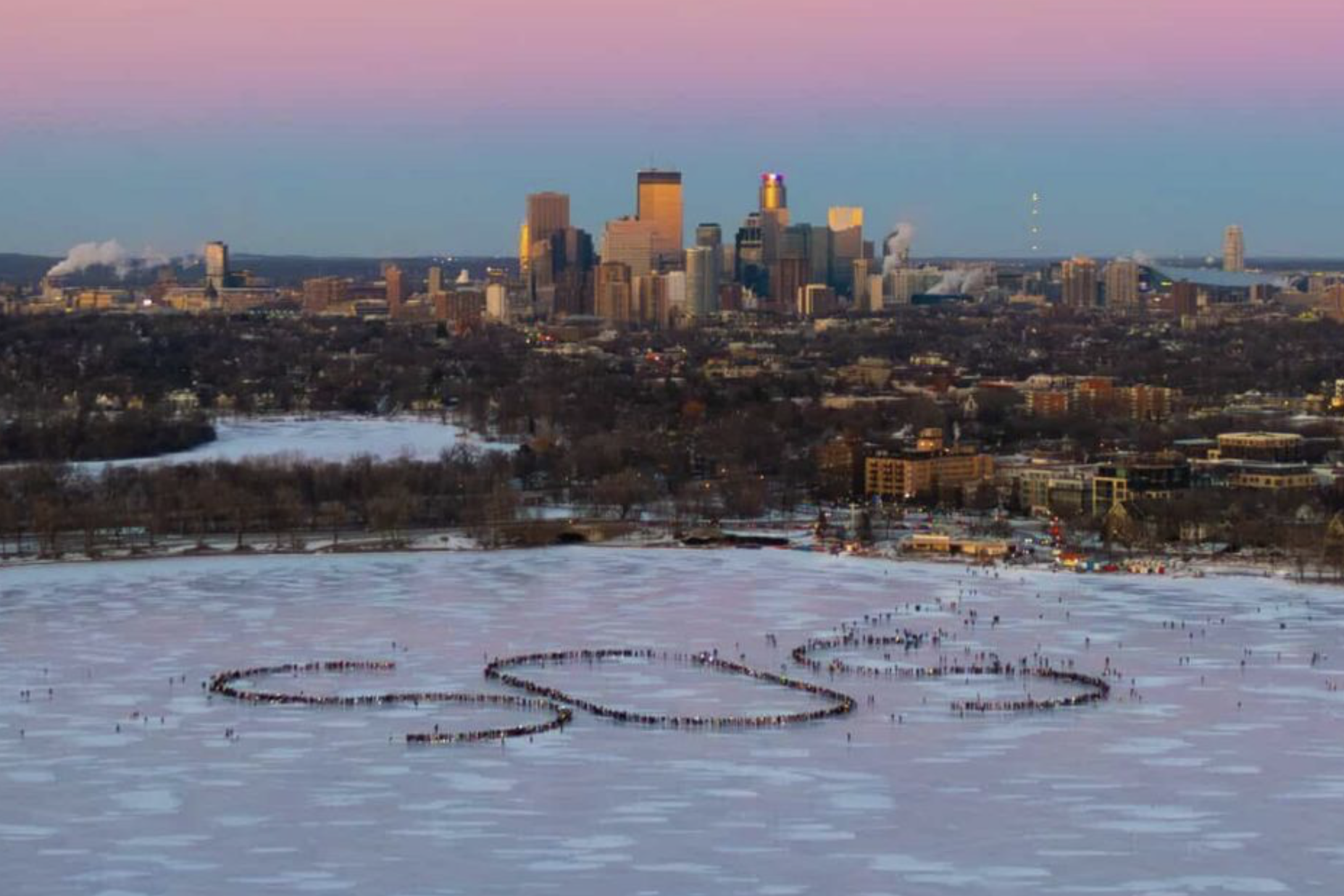
Photo by Jeff Schad.
Our true values are not the ideals swirling in our heads. They are only these: our actions.
In a teetering democracy, injustice quickly fills the void created when we fail to live our values.
The value of peace is neither silent nor passive; it requires relentless tending.
Last week, I wrote about Minnesotans embodying peace. Now I want to chronicle some specific acts my family, friends, and neighbors are undertaking in my hometown of Minneapolis. They are showing us the path forward. We can’t look away.
Speaking truth to power
Thousands of peaceful protestors are packing the streets, demanding peace, justice, and accountability. They are, quite literally, singing their resistance across the city. Residents are calling and writing to their elected officials, articulating their expectations for meaningful action. My lawyer friends are involved in suing the heck out of the federal government to ensure it upholds that pesky little foundational document: our Constitution.
Caring for community
Residents are attending trainings to better understand our Constitutional rights. They are calculating the risks they are willing to take to keep our democracy afloat. They are alerting each other to the presence of federal agents.
They are checking on friends, colleagues, and neighbors with targets on their backs. In Minneapolis today, that means pretty much everyone who is not stark white. As ICE picks off people, regardless of legal status, from parking lots, gas pumps, and places of work, and ships them immediately to Texas detainment facilities, many families are left hiding fearfully in their homes. Community members are taking up food collections, delivering supplies, driving their kids to and from school.
Some have even created networks to hide families in their houses—a modern-day Underground Railroad. Yes, this is where we are right now.
Residents have also formed a group to escort those being released from the horrors of wrongful detainment in the middle of the night, in subzero weather, sometimes without a phone, coat, or even shoes. They are comforting them, providing them with meals and clothing, taking them to safety, reminding them that, despite the cruelty they just endured, compassion still exists.
Bearing witness
As a lifelong documentarian, I’ve always believed that bearing witness to another’s life is one of the greatest gifts we can offer. Minnesotans are planting their feet firmly on the ground and observing others’ experiences, despite serious personal risk. They are filming violent actions. They are providing official testimonies. They are attending candlelight vigils and memorial bike rides for those murdered by federal agents. Their presence sends a clear message to fellow community members: We see you. It also sends a clear message to the forces occupying the city: We see you.
Sharing their stories
Minnesotans are not only bearing witness but zeolously sharing what they’re seeing with the rest of us every time they upload a video, give an interview, write an article, or post about their experiences on social media.
They also orchestrated a chilling SOS photo, taken on a frozen lake with the Minneapolis skyline as a backdrop (shared here). The world took note.
(I was unsurprised to learn that numerous childhood friends participated in the SOS photo. That lake, Bde Maka Ska, is the epicenter of outdoor living in the city. Growing up, we walked, ran, biked, and rollerbladed around it regularly. We skated on it in the winter. We paddled across it in summer. I never make a trip home without visiting it. Just last summer, we canoed around it with my very first friend in the world and her family.)
Engaging in small acts with big potential
People are knitting and crocheting red “Melt the Ice” hats, a nod to those worn by Norwegian resistors during WWII. (My daughter is making me one!) I hear it’s become difficult to find red yarn in Minneapolis. While things like hats may seem silly or even frivolous, they are anything but. I call wearing such an item an “everyday mention,” a casual, nonconfrontational way to signal your position. Research shows that a key trigger for cultural change comes from prevalence signals, meaning clues that convince a person they are not alone in their values, that others agree with their stance. This realization is how momentum begins to build. A hat is never just a hat.
Finding joy in resistance
A family member decided that one of his acts of peaceful resistance is to go around the city and eat as many delicious tacos as humanly possible from immigrant-owned restaurants.
I’d never considered the importance of delighting in resistance until last summer, when I attended a book talk by activist Loretta Ross. She pointed out that our work will not be sustainable unless we find joy in it. And since peace can never be left unattended, we’ve got to find ways to keep ourselves going for the long haul. In other words, it’s imperative to find your tacos!
I’ve always said that Minnesotans are the hardiest people you’ll ever meet. We’d never let a bit of ice keep us from living our values.